Apply

Manifesto · Season I

The right to look

Seven theses and five essays on why porn that one person films on a phone, photographs or draws is art. On the end of high and low, metamodernism and the right to pleasure.

Epigraph

“Taste classifies, and it classifies the classifier.”
— Pierre Bourdieu · “Distinction”, 1979
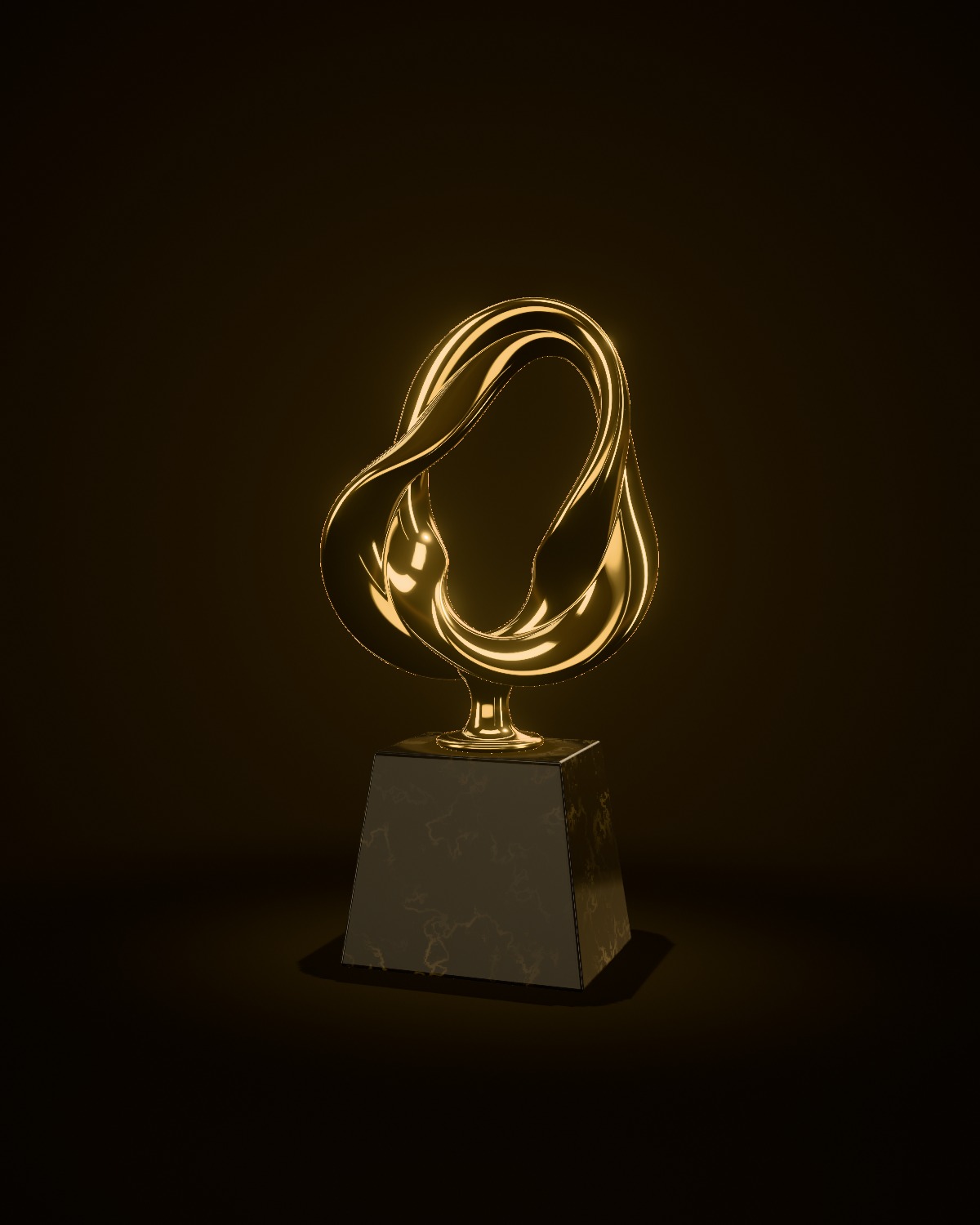
The statuette upside down, as in a camera obscura

Camera obscura

The first camera in history was a dark room with a hole in the wall. Light passed through the opening and painted the world on the opposite wall — upside down, but alive. Every image begins this way: with a hole someone looks through. Our awards are named in its honour.

Theses

Seven propositions

  1. The body is art’s first material

    Long before canvas, someone carved the Venus of Willendorf out of stone — a figure with no face, all flesh. Antiquity set naked athletes in its public squares; the Renaissance covered chapel ceilings with bodies. Shame entered art later than the body did. It will leave sooner.

  2. A hierarchy of taste is a hierarchy of power

    People, not gods, split art into high and low. Pierre Bourdieu showed that taste works as a border between insiders and outsiders. When porn is called a low genre, the issue is not the quality of the frame but who is allowed to look, and who is allowed to be shown.

  3. A genre is not a verdict

    Photography was called a soulless trade, cinema a fairground attraction, jazz noise from the basements, comics reading for the illiterate. Each time, someone looked more closely than everyone else, and the genre gained a history, a criticism and its classics. We propose to look more closely.

  4. We need an erotics of art

    In 1964 Susan Sontag ended her essay “Against Interpretation” with a demand: “In place of a hermeneutics we need an erotics of art.” She wanted to give the viewer back their senses — to see, hear and feel more. Porn is the one genre where that programme is carried out literally. What remains is learning how to talk about it.

  5. The author returns

    Roland Barthes announced the death of the author in 1967. The porn industry had buried him earlier still: the studio, the assembly line, bodies without names. The phone, the tablet and Telegram brought back a figure everyone had written off — a person who conceives, films, photographs, draws, edits and answers for every work. That is who we reward.

  6. Craft is not measured in budget

    Window light, one camera, an honest cut. Dogme 95 proved that constraints give birth to style, not poverty. We look at decisions, not equipment: how the frame or the sheet is built, where the camera stands, what justifies the edit, why there is emptiness or silence here.

  7. We judge contribution, not looks

    A beauty contest scores bodies. A festival or a gallery asks something else: what does this author stand for, and what changed because of them — in the language of the genre, in the industry, in culture, in society. Those are our questions. A beautiful body is raw material, not merit; merit is the gaze, the position and what they moved.

Essays

Five reflections

The theses say what we believe. The essays explain why: where the split into high and low art came from, why arousal is an aesthetic feeling, and how a personal channel became a work of art.

Essay 01

After high and low

“The whole point of Camp is to dethrone the serious.”
— Susan Sontag · “Notes on Camp”, 1964

As early as 1965 Sontag noticed that a Jasper Johns painting, a Godard film and the Beatles were equally accessible, and the line between “high” and “mass” culture was ceasing to mean anything. Sixty years on, it has not grown any firmer.

The split into “elevated” and “base” is not a law of nature. It was used most eagerly by those deciding what others should feel: from “Muddle instead of music” to the “Degenerate Art” show. A hierarchy of taste almost always comes hand in hand with a hierarchy of people.

Essay 02

Arousal is an aesthetic feeling too

“In place of a hermeneutics we need an erotics of art.”
— Susan Sontag · “Against Interpretation”, 1964

Kant taught that a judgement of beauty is “disinterested”: we admire while wanting nothing. Anything that moved the body was declared beneath art. Linda Williams called melodrama, horror and porn “body genres”. The first two have long won prizes; the third is still outside the door.

Arousal is not a failure of perception but its extreme form. Desire for a well-made work is not a shameful side effect. It is proof that the work worked.

Essay 03

The channel as a work

“Every human being is an artist.”
— Joseph Beuys · 1970s

Since Duchamp’s urinal, art is no longer defined by material. The artist’s body became material long ago: Warhol’s “Blow Job”, Acconci’s “Seedbed”, Koons’s “Made in Heaven”. The world’s major museums now hold these works.

A personal Telegram channel is a direct heir to that line. Body, gaze, pictures and drawings, the rhythm of posts, the light in the room add up to one person’s total work, stretched out in time.

Essay 04

Metamodernism: in earnest and with a smirk

“We must go forth and oscillate!”
— Luke Turner · “Metamodernist Manifesto”, 2011

Postmodernism taught us irony, but by the 2000s it had run out of breath. Metamodernism oscillates between enthusiasm and irony, hope and melancholy. Our awards are that gesture: we laugh at the ceremony of prizes and hand them out in complete earnest.

Author-made porn lives in the same oscillation: funny and tender, crude and honest, staged and sincere, all in one frame. That is not a flaw of the genre. It is what makes it contemporary.

Essay 05

Liberation

“Where there is power, there is resistance.”
— Michel Foucault · “The Will to Knowledge”, 1976

Power does not so much forbid sex as talk about it endlessly: classifying, treating, judging. The question is no longer whether sex will be shown, but who shows it and on whose terms.

An author who makes and publishes their own work is free of the censor, the studio and the stereotype of the “proper” body. There is one border: consent. It is not a limit on freedom but its form.

Vision

We want the best authors of this genre to be written about in ten years the way photographers, artists and directors are: by name, with their methods analysed and their taste argued over. We want the genre to have a history, and the history to have its classics.

  1. Season I●

    A map of the scene

    Gather the Post-Ost authors who film, photograph and draw on their own into one list. Show that the scene exists and has faces.

  2. Five years▶

    A language

    Develop a critical vocabulary: reviews, analyses, names for techniques. So that porn can be argued about in substance, not only blushed at.

  3. Ten years▶▶

    An archive

    The collection of awards on the blockchain becomes an open chronicle of the genre: who was recognised, when and for what. It cannot be rewritten after the fact.

Glossary

Ten words

Hole
Not an absence but a condition: without an opening there is no light, no gaze, no way in. A word we decided not to be embarrassed by.
Gaze
Not sight but a position. Who looks, at whom and by what right — the central question of every frame.
Author
The one who answers for the whole work, from the idea to the final cut or the last stroke. The camera and the brush may be borrowed; the gaze must be one’s own.
Body
Material, instrument and subject. Not merchandise.
Taste
The skill of telling things apart. It can be learned, it can be shared, and it must be argued over.
Camp
A love of the artificial and the exaggerated. The ability to enjoy without asking good taste for permission.
Metamodern
The structure of feeling after postmodernism: oscillation between irony and sincerity, enthusiasm and doubt. Laughing at a ritual and taking part in it in earnest.
Arousal
An aesthetic response considered base for far too long. A body genre measures success not in applause but in pulse.
Channel
A format of publishing that became a form of art: videos, photographs and drawings in one feed — series, diary and exhibition at once. The author is artist, model and curator in one person.
Freedom
The right to one’s own image. For a queer author in a country whose law calls their existence “propaganda”, this is not an abstraction but a daily practice.
We are not asking permission to call this art. We are starting to treat it as art.

THE GOLDEN HOLE · Season I · MMXXVI

Show us how you see

01Camera obscura